Copper dominates electrical and industrial systems for one obvious reason is conductivity. But as applications grow more demanding in semiconductor fabrication, aerospace electronics, high-frequency RF systems, conductivity alone stops being the complete answer. Both electrolytic tough pitch copper and oxygen-free copper bars offer excellent conductivity, but they perform very differently in environments where purity, contamination risk, and embrittlement matter as much as electrical performance. Understanding that difference is what guides the right material selection for high-purity copper applications.
What is ETP Copper?
Electrolytic Tough Pitch copper is the most widely produced and used copper grade in industrial applications. It’s manufactured through an electrolytic refining process that produces very high purity but with a small, intentional oxygen content that remains in the finished material. That oxygen content is what gives ETP copper its name and defines its performance characteristics.
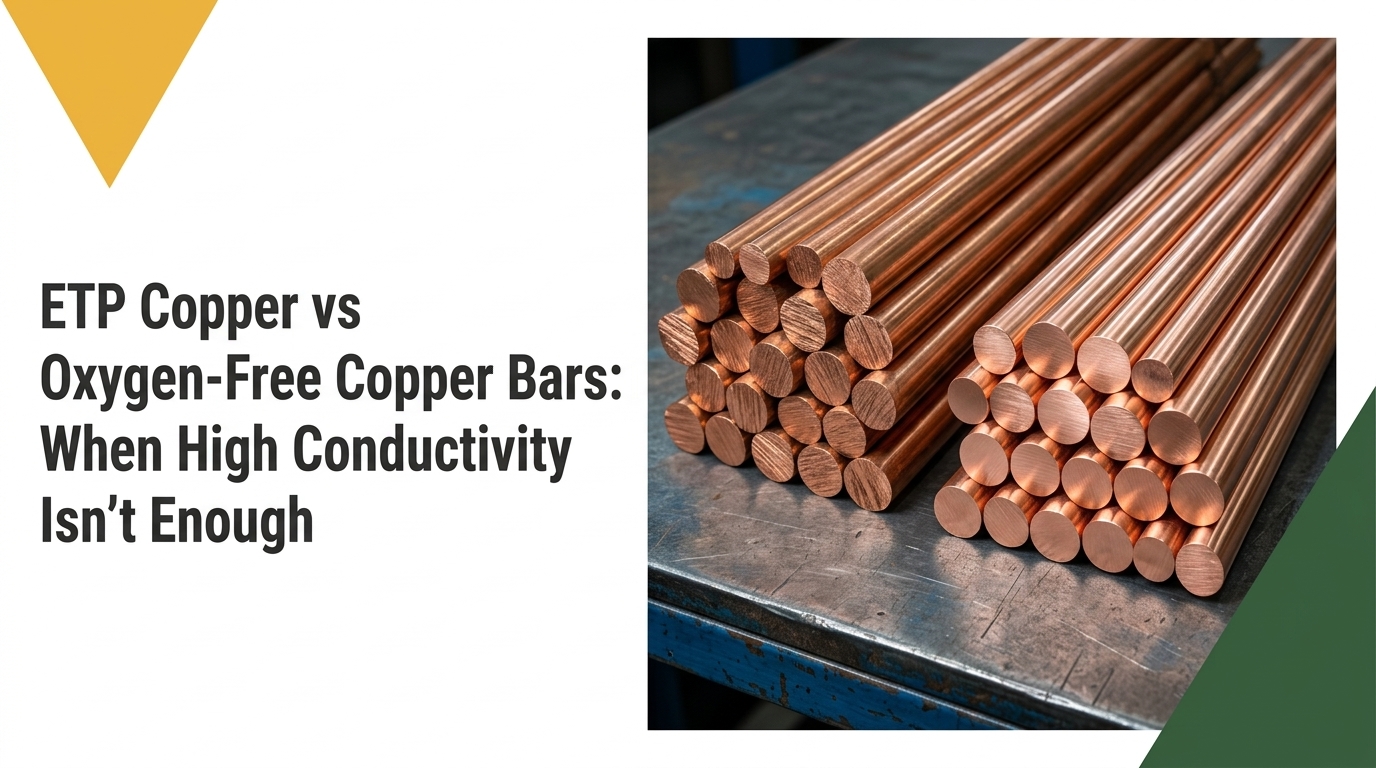
The ETP copper chemical composition delivers conductivity close to the theoretical maximum for copper, making it excellent for electrical busbars, switchgear, transformers, and standard electrical equipment. It’s also cost-effective, machines cleanly, and forms well across a range of fabrication processes. For general-purpose electrical and industrial systems operating in normal environments, electrolytic tough pitch copper is the practical, proven choice. We stock ETP copper round bars for exactly these applications, reliable performance at competitive cost.
What is Oxygen-Free Copper?
It’s copper that has been refined to remove oxygen below a threshold that standard ETP grades can’t achieve. The result is significantly higher purity and a set of performance characteristics that matter in applications where even trace contamination creates problems.
High-purity copper in oxygen-free grades, including OFC and OFE copper, offers improved thermal conductivity, superior ductility, and dramatically better resistance to hydrogen embrittlement. That last property is particularly important. In high-temperature reducing atmospheres, the oxygen present in ETP copper reacts with hydrogen to form steam inside the material. This internal pressure creates micro-cracks embrittlement that degrades mechanical and electrical performance without any visible external warning.
Oxygen-free copper eliminates this risk entirely. Semiconductor manufacturing, aerospace electronics, medical imaging equipment, and high-frequency RF and microwave systems all specify oxygen-free grades because the operating environment demands a material that won’t degrade through contamination or embrittlement under thermal or electrical stress.
ETP Copper vs Oxygen-Free Copper: Key Performance Differences
ETP copper performs reliably in general electrical systems. Busbars, grounding conductors, transformer windings, and standard switchgear all see ETP copper as the default specification because it delivers the necessary conductivity at acceptable cost with consistent fabrication performance.
When the environment requires more than conductivity, oxygen-free copper steps in. OFC reduces embrittlement risk from ETP copper’s oxygen concentration in high-temperature reduction brazing and welding. ETP copper outgassing contaminates vacuum applications, electron beam equipment, vacuum furnaces, and semiconductor processing chambers more than oxygen-free grades. Very high-purity copper improves signal integrity in high-frequency RF and microwave applications.
| Property | ETP Copper | Oxygen-Free Copper |
| Purity Level | High | Very High |
| Oxygen Content | Present | Extremely Low |
| Conductivity | Excellent | Excellent to Superior |
| Hydrogen Embrittlement Resistance | Moderate | Excellent |
| Vacuum Applications | Limited | Excellent |
| Thermal Conductivity | High | Higher |
| Cost | Lower | Higher |
| Typical Applications | Electrical Equipment | Semiconductor and Precision Electronics |
Choosing the Right Copper Bar for Industrial Applications
The operating environment drives the selection between these two grades. Standard electrical systems, power distribution infrastructure, and general industrial fabrication are well-served by ETP copper bars. The performance is reliable, and the cost is appropriate for the application. High-temperature processing, vacuum compatibility, semiconductor equipment, and high-frequency electronics are where oxygen-free copper earns its higher cost through performance that ETP simply can’t replicate in those environments.
The fabrication method matters too. If the production process involves brazing or welding in a hydrogen-containing atmosphere, oxygen-free copper eliminates the embrittlement risk that would otherwise create quality and reliability problems in the finished component. Sourcing certified high-purity copper bars from trusted suppliers with documented composition and purity traceability is the foundation of consistent performance in both grades.
We manufacture high quality copper round bars in ETP and oxygen-free grades for electrical, industrial and precision applications, with the material documentation that engineering and procurement teams need to specify with confidence at RK Copper & Alloy LLP.
Conclusion
High conductivity is the starting point for copper material selection, not the finishing line. ETP copper handles general electrical and industrial requirements reliably and cost-effectively. Oxygen-free copper takes over in applications where purity, vacuum compatibility, embrittlement resistance, and thermal performance determine whether the system works as designed or develops failures that conductivity ratings don’t predict. Evaluate your operating environment, fabrication process, and performance requirements against both grades before finalizing your specification.