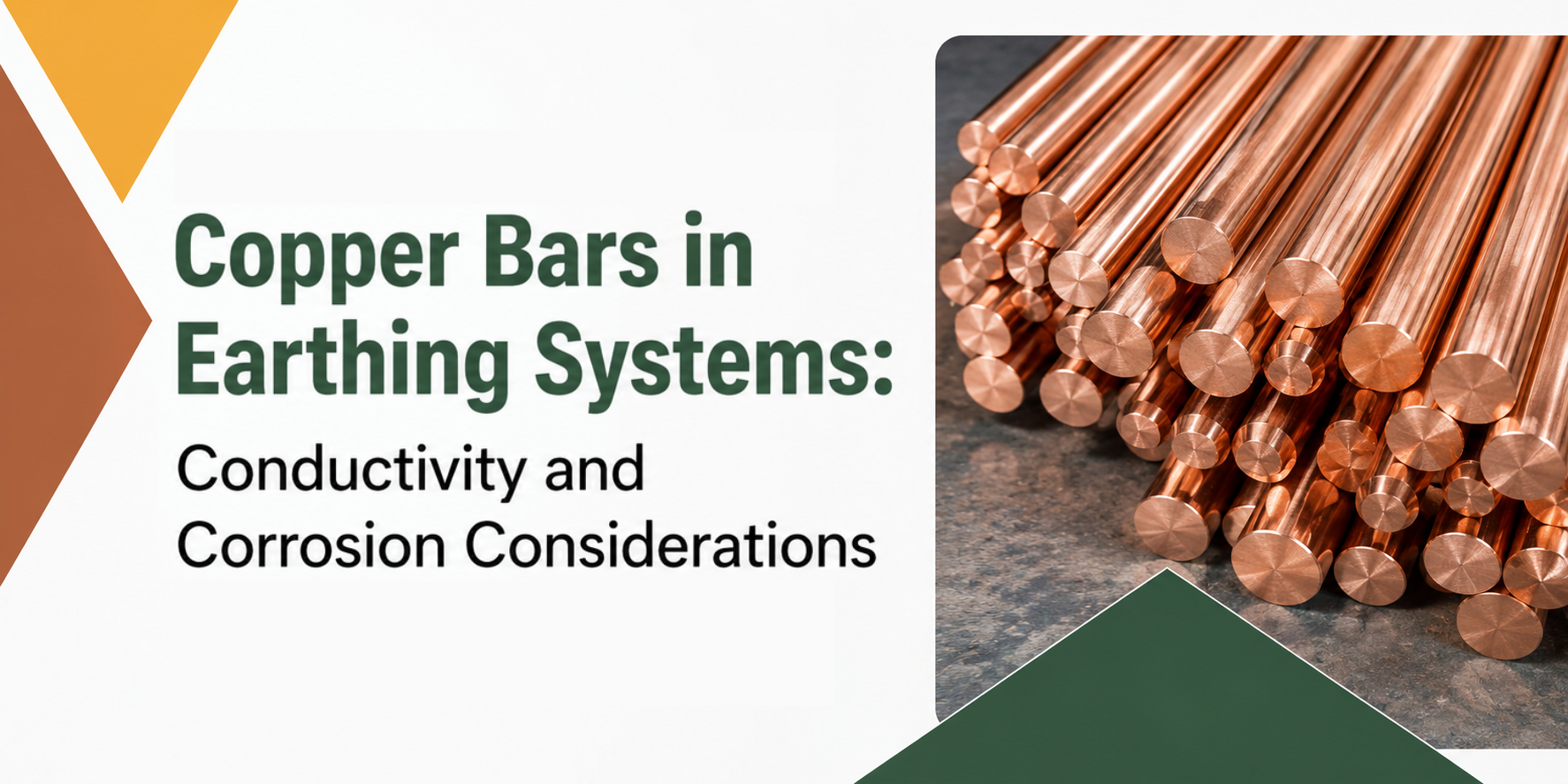
Copper bars are the backbone of reliable electrical earthing systems. Every time a fault current needs a safe path to ground, the material carrying it determines how well the system protects equipment, infrastructure, and people. Conductivity and corrosion resistance are the two properties that matter most in grounding applications and copper bars deliver both better than any widely available alternative. At RK Copper & Alloy LLP, the copper bars supplier for industrial and infrastructure earthing applications for over three decades, and we understand exactly what reliable grounding material needs to do.
Why Copper Is Preferred for Earthing Systems
Copper’s electrical conductivity is among the highest of any practical engineering material. Low resistance means fault current reaches earth quickly without voltage building up dangerously, the fundamental requirement of any effective earthing system.
Along with conductivity, copper handles the heat generated during fault events without degrading. Electrical substations, industrial plants, telecom infrastructure, and renewable energy projects all rely on copper bars for this reason. Large copper bars are particularly important where current volumes demand a conductor that won’t falter under load.
Conductivity Performance of Copper Bars in Grounding Applications
Low-resistance current pathways are what make earthing systems effective. When a fault occurs, the grounding grid must carry that surge without resistance-related voltage rise. Copper bars create exactly this kind of pathway. Their conductivity advantage over galvanized steel or aluminium is significant and consistent across service life. Large copper bars in heavy electrical installations provide the current-carrying capacity that high-fault-current environments demand.
Corrosion Resistance and Long-Term Reliability
Underground grounding networks face conditions that degrade most metals quickly. Soil moisture, chemical variation, and in coastal environments, salt contamination attack buried conductors continuously. A grounding system that corrodes loses its ability to safely dissipate fault current; that’s a safety risk, not just a maintenance issue.
Copper resists environmental attack naturally without requiring protective coatings in most soil conditions. Reduced maintenance requirements and longer operational lifespan mean the system continues performing reliably without frequent intervention.
Understanding Earthing Copper Rod Sizes and Specifications
The size of the copper rod directly affects how much fault current the system can safely handle. An undersized conductor creates a resistance bottleneck. The system appears complete, but fails under real fault conditions. The correct size depends on the level of fault current, the soil resistivity, the depth of installation, and the industry standard used.
Copper earthing rod specification requirements vary by application, power distribution, telecommunications and solar systems. Each has different current handling needs. And with the appropriate dimensions specified up front, you save time and money on costly rework while ensuring regulatory compliance from day one.
Industrial Applications of Copper Bars in Earthing Systems
The following pointers show the general applications of Copper Bars in Earthing Systems across the various industries.
Power Plants and Substations
These heavy-duty bars handle large fault currents in generation facilities and high-voltage substations, providing the low electrical resistance and absolute reliability required to protect critical utility grids.
Telecom Towers
These grounding elements offer a steady electrical discharge operation under changing weather circumstances and unplanned load spikes while maintaining reliable signal dependability and safety of sensitive electronic equipment.
Commercial Buildings
These high-conductivity bars are increasingly being specified by architects for modern high-rise commercial and infrastructure complexes where reliable building earthing is a severe regulatory safety requirement.
Manufacturing Facilities
Heavy industrial machinery creates continuous electrical interference and sudden fault risks, making robust copper grounding essential to protect automated equipment and plant operators from shocks.
Solar and Wind Energy Projects
Renewable generation installations rely on these grounding bars as a standard specification to safeguard multi-megawatt power inverters and distribution transformers against devastating lightning strikes.
Copper Bars for Earthing Systems: Comparison Table
The following table shows the detailed comparison of Copper Bars for Earthing Systems features.
| Property | Copper Bars |
| Electrical Conductivity | Excellent |
| Corrosion Resistance | High |
| Service Life | Long |
| Fault Current Capacity | Excellent |
| Maintenance Requirement | Low |
| Grounding Reliability | High |
| Industrial Suitability | Excellent |
| Underground Performance | Excellent |
Selecting the Right Copper Bars for Earthing Applications
Choosing the correct copper bar starts with the fault current level that determines the minimum conductor cross-section. Environmental exposure conditions influence whether standard grades are appropriate. Quality-certified copper bars supplier material improves grounding reliability and reduces degradation risk. Proper material selection at specification stage reduces maintenance frequency and eliminates premature replacement both significant cost factors in large infrastructure projects.
Conclusion
Copper bars provide the conductivity, corrosion resistance, and long-term stability that effective earthing systems demand. Correct sizing, proper material specification, and a quality-certified supplier are the three decisions that determine whether a grounding system performs reliably for its full design life. Explore premium-quality copper bars engineered for high conductivity, corrosion resistance, and reliable industrial earthing performance.