Copper flat bars are used in switchgear, grounding systems, and structural assemblies across electrical and industrial projects. Panels, distribution boards, construction frameworks and machinery all rely on this component working properly. If the size or grade is wrong, you usually find out later, through overheating, corrosion, or a bar that just doesn’t fit the connection. Grade, dimensions, conductivity and the actual application all need to be checked before ordering. This copper flat bar buying guide covers what to look at.
What Is a Copper Flat Bar?
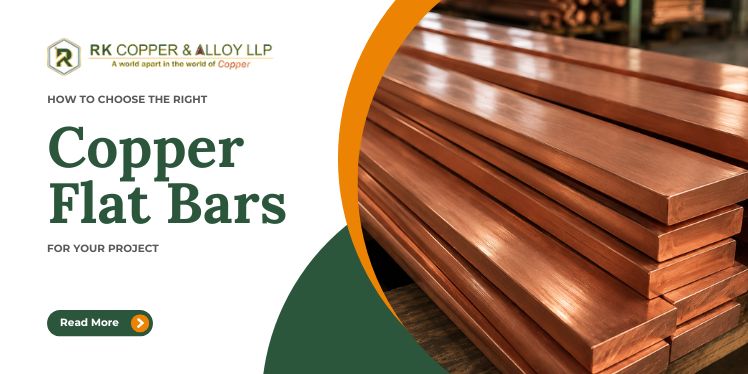
A copper flat bar is a solid rectangular section of copper, either rolled or extruded to a set width and thickness. Engineers use it for electrical bus bars because copper conducts with very little resistance loss. It’s also used in grounding systems since it holds up well outdoors over long periods. Fabricators like it because it bends, punches and welds without cracking. You’ll see copper flat bars in switchgear cabinets, distribution boards, and structural frames.
Why Choosing the Right Copper Flat Bar Matters
Copper flat bar carries current, supports mechanical loads and holds up under continuous duty cycles in busbars, transformers and grounding systems. Purity and cross-section decide how much current passes without excess heat buildup. Grade and temper matter too. A bar with the wrong temper bends under mechanical stress, fatigues at connection points, corrodes faster, or forces oversized runs that push up material costs. Selecting the right bar keeps conductivity high, resists stress at bends and joints, and holds project budgets steady from installation through operation.
How to Choose the Right Copper Flat Bar for Your Project
Identify the Application Requirements
Work out first whether the bar is for an electrical circuit, grounding, fabrication, or a structural part. Each of these has different load, conductivity and finish requirements, so this decides most of the rest.
Select the Appropriate Copper Grade
The grade decides how much current the bar can carry and how it holds up under heat. High purity copper is normally used for electrical work, since even small drops in conductivity add up across a distribution network.
Choose the Right Dimensions
Width, thickness and length need to match the current or load the bar will carry. Too small and it overheats. Too large and you’re paying for material you don’t need. Check dimensions against your load calculations before placing the order.
Evaluate Conductivity Requirements
For electrical work, conductivity is the main thing to get right. A bar with the correct purity and cross-section keeps resistive losses down and temperatures lower, which matters over long cable and busbar runs.
Consider Corrosion Resistance and Installation Environment
Indoor switchgear and outdoor substations are not the same environment. Moisture, humidity and industrial pollutants all affect how long a bar lasts. Match the finish and coating to where it’s being installed, this is often the difference between years of service and an early replacement.
Buy from a Trusted Supplier
Check product quality, material certification and dimensional accuracy before ordering. A supplier who delivers on time and offers technical support saves you from delays and spec errors once work has started.
Key Benefits of Copper Flat Bars
A few reasons copper flat bars are used so widely across electrical and industrial work:
- Excellent electrical conductivity, current moves through with very little resistive loss
- High thermal conductivity, heat dissipates well in high load applications
- Good corrosion resistance, holds up to moisture and atmospheric exposure indoors and outdoors
- Strong mechanical properties, handles structural and mechanical loads without deforming
- Easy fabrication, can be bent, cut, drilled and welded without much difficulty
- Long service life, performance holds up over decades in the right conditions
- Reliable performance, behaves consistently under electrical and mechanical demands
- Low maintenance, doesn’t need much attention once it’s properly installed
- Works across multiple industries, from electrical to construction to energy
- Recyclable, retains value at the end of its service life
Common Applications of Copper Flat Bars
Copper flat bars turn up in a lot of places, including:
- Electrical bus bars, distributing current within panels and switchboards
- Switchgear, connecting and isolating circuits in medium and low voltage assemblies
- Power distribution panels, routing current from the supply to individual breakers
- Grounding systems, giving fault current a low resistance path to earth
- Control panels, linking control circuits and instrumentation in automation systems
- Transformers, connecting windings and terminals where conductivity matters
- Electrical substations, handling high current connections between transformers and feeders
- Industrial fabrication, forming brackets, connectors and structural parts on site
- Renewable energy systems, carrying current within solar inverters and wind installations
- Construction projects, supporting electrical infrastructure in commercial and industrial buildings
Final Checklist Before Buying a Copper Flat Bar
Before confirming an order, it helps to run through this list:
- Copper grade suited to the application
- Flat bar dimensions matched to load calculations
- Conductivity requirements confirmed for electrical use
- Mechanical strength adequate for structural demands
- Corrosion resistance suited to the installation environment
- Surface finish suited to indoor or outdoor exposure
- Material certification available from the supplier
- Compliance with relevant industry standards
- Supplier reliability for delivery and technical support
- Project budget aligned with the material and grade chosen
Conclusion
Choosing the right copper flat bar comes down to looking at the application, the grade, the dimensions and the environment together. Getting these right improves electrical performance, extends how long the bar lasts, and keeps the project running efficiently from installation onward. Sourcing copper flat bars from a supplier like RK Copper & Alloy LLP gives project teams the material quality, certification and technical support needed for reliable, long-term performance across electrical, commercial and industrial work.